The Constellation · an investigation
October 27
4°20′ Scorpio
Three turning points. One solar longitude. An open question.
The record
What happened?
What can we verify?
Chronology, documents, and the position of the Sun.
Logos.
The question
What does it evoke?
What patterns emerge, and which did we bring with us?
Synchronicity, and the wish that a date might mean.
Eros.
2010 · Movement
A curtain, a sign, a factory
On October 26, 2010, Tesla Motors told the press to come the next afternoon. Wednesday, October 27, 3:00 p.m. Pacific. 45500 Fremont Boulevard. Elon Musk would be there, and so would Senator Dianne Feinstein.1
The building had been NUMMI. Toyota closed it in April. Tesla bought it in May. Chuck Squatriglia, writing in Wired two days after the unveiling, put the price at $42 million and the floor at 5.5 million square feet. General Motors had built it in 1962. The joint venture with Toyota dated to 1984.2
Musk told Wired he was “very confident of starting production of the Model S in 2012,” and that there were “no outstanding engineering challenges left.” Squatriglia also reported that Musk called the opening “a hugely historic moment in Tesla’s life.” Feinstein, in the same piece, said a green manufacturing base was “the future.”
At 3:00 p.m. Pacific that day the Sun’s geocentric ecliptic longitude was 4°23′ Scorpio. It had crossed 4°20′, which is 214°20′, at 20:57 UTC. That is 1:57 p.m. in Fremont, about an hour before the hour on the invitation.4
A plant is a fact. A beginning is a reading of a fact. The curtain shows a sign. What the sign was for is the part still being argued in the years after.

“The reason I acquired Twitter is because it is important to the future of civilization to have a common digital town square, where a wide range of beliefs can be debated in a healthy manner, without resorting to violence.”
2022 · Communication
A letter in the morning
October 27, 2022, Musk posted a letter that began “Dear Twitter Advertisers.”5 The sentences above and below are the ones several newsrooms transcribed that day. They are his stated reasons, not a later verdict.
The merger itself is a different document. Twitter’s Form 8-K, filed October 28, says the merger was consummated on October 27. Each share became the right to $54.20 in cash. The same filing says Musk became the sole director that day.6
The Financial Times reported that the close came Thursday night, and that Parag Agrawal, Ned Segal, Vijaya Gadde, and Sean Edgett were out.7 The Guardian dates a post, “the bird is freed,” to October 28.8 A civil date in a securities filing and a timestamp on a post can both be true and still not be the same clock.
The Sun crossed 4°20′ Scorpio at 18:54 UTC on October 27, 2022. That was 11:54 a.m. Pacific and 2:54 p.m. Eastern. In Japan it was already October 28.4
A stated wish to help humanity and a completed purchase are both on the record. They are not the same kind of sentence. One can be sincere and still be a poor description of what followed. This page does not pretend to score the years after.
“I didn’t do it because it would be easy. I didn’t do it to make more money. I did it to try to help humanity, whom I love.”
“Will be a massive improvement over Wikipedia.”
“Frankly, it is a necessary step towards the xAI goal of understanding the Universe.”
2025 · Knowledge
An encyclopedia with a version number
Monday, October 27, 2025, xAI’s Grokipedia was live. Kate Conger, in The New York Times, reported the launch that day, a brief crash that afternoon, and Musk’s claim that the site would “purge out the propaganda.” She counted more than 800,000 entries against Wikipedia’s much larger human-written set.9
The Verge described version 0.1 and a ticker above 885,000 articles, and reported that some pages said their content was adapted from Wikipedia.10 A launch can be a milestone and a borrowing at the same time. The ambition is not undone by the debt. The debt is not erased by the ambition.
On September 30, weeks earlier, Musk had written that Grokipedia was “a necessary step towards the xAI goal of understanding the Universe.”11 That is a purpose clause. It is not a proof that the purpose was met on the Monday it opened.
The Sun crossed 4°20′ Scorpio at 12:10 UTC that Monday, 5:10 a.m. Pacific, before the afternoon the Times describes. The minute of the launch is not in these sources. The day is.4
Eleven months later, on September 29, 2026, Executive Order 14434 told the United States executive branch to say “Super Intelligence” and “SI” instead of “artificial intelligence” and “AI.” The order defines those new labels as the technologies already named in the statute.12 Grokipedia had launched under the older name. A later policy is not a birth certificate.
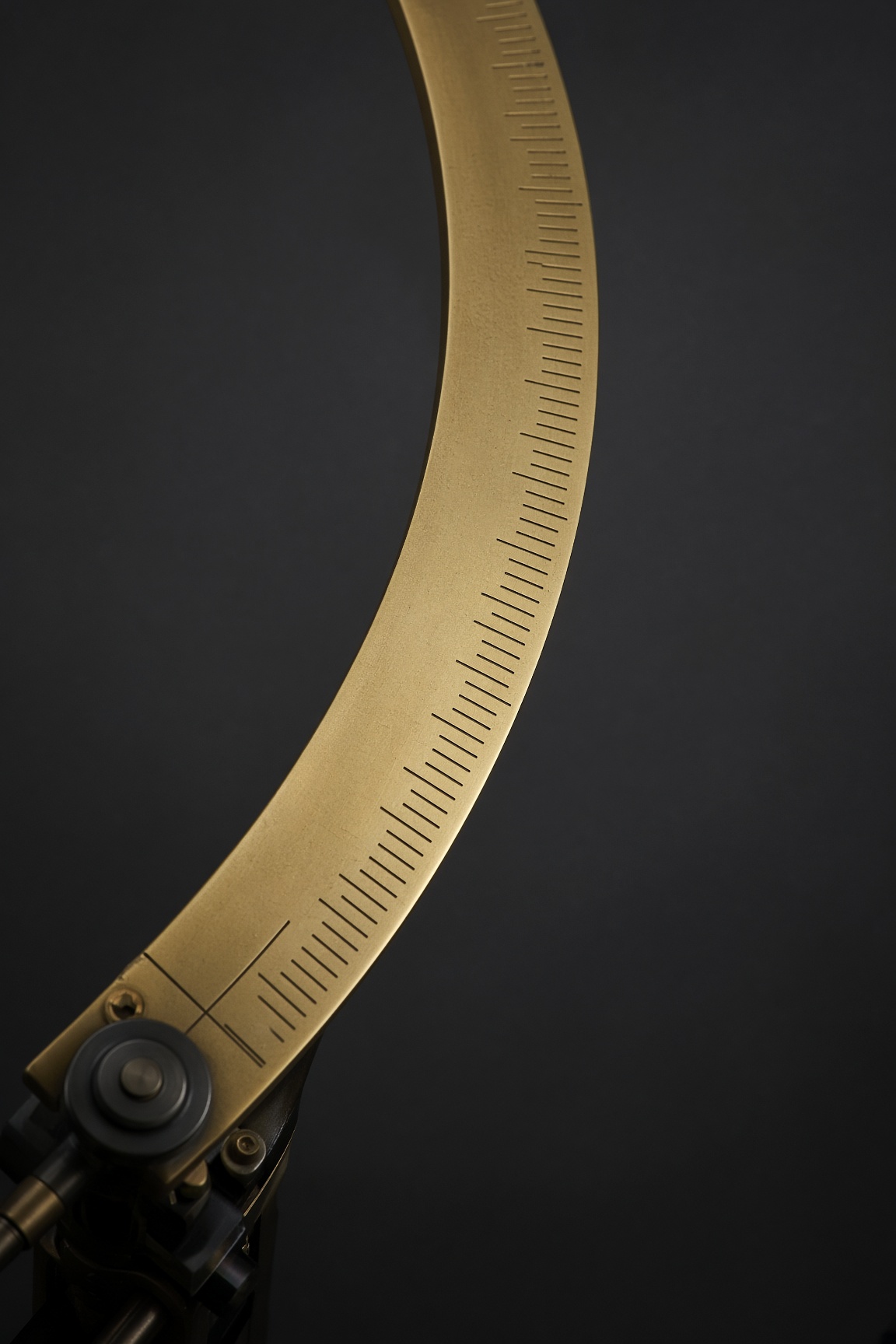
The instrument
The same sky, three clocks
4°20′ Scorpio, in this inquiry, means one number: geocentric ecliptic longitude 214°20′, counted in the tropical zodiac from the March equinox. It is a coordinate. It is not a claim that the Sun is standing in the stars of the constellation Scorpius. The stars and the signs parted company a long time ago.
Move the year. The dot is the crossing. When a clock has already changed the date, the line says so. The sky did not jump. The calendar did.
To the nearest minute, from one-minute JPL samples. One of the years in this inquiry.
From 2000 through 2032, a direct query of JPL Horizons puts that longitude on October 27 UTC in most years, and in the early hours of October 28 UTC in 2003, 2007, 2011, 2015, 2019, and 2023. Those October 28 crossings are still October 27 in Pacific time. In 2024 and 2028 the Pacific clock still reads October 26. Japan, nine hours ahead of UTC, often already has the next morning.4
The four years in the story, 2010, 2022, 2025, and 2026, do share October 27 in the United States. That is a real agreement of civil dates. It is not the sky keeping a holiday. Leap day is the rude mechanic. Three common years walk the crossing later by about six hours each. The fourth year, with a February 29 behind it, yanks the moment back into the morning.
On October 27, 2026, the crossing comes at 18:02 UTC. Central time reads 1:02 p.m. Tokyo reads 3:02 a.m. on October 28. Same Sun. Two dates. This is the hour the inquiry is standing in, and a coincidence that needs one civil date for the whole Earth has already failed it.
Three frameworks, kept apart
What are we noticing?
Carl Jung gave the name synchronicity to a coincidence he thought meaningful, and which he did not claim was caused in the ordinary way. The book is Synchronicity: An Acausal Connecting Principle, 1952.13 A felt meaning is an experience. It is not, by itself, a finding about the factory, the purchase, or the encyclopedia.
Probability asks a drier question. “What are the odds?” is not a number until someone says, before looking, which events would have counted, over what years, and against what other dates. Choosing three October 27ths after noticing them is a selection. Humans are astonishingly good at it. Give us a factory, a network, and an encyclopedia on one repeating solar longitude and we will feel the universe lean in. The lean may be ours.
We looked for a fourth event of the same kind, another documented turning point in this same sequence of companies on October 27, and did not find one that met the standard of the three. Absence is also a result. It does not make the three unreal. It keeps them from becoming a law.
Nick Bostrom’s 2003 argument is not a discovery that we live in a simulation.
It says that one of three things is very likely: we never reach a posthuman stage, posthuman civilizations almost never run ancestor simulations, or we are almost certainly in one.
None of the three tells you whether a shared date is meaningful. The hypothesis changes the furniture. It does not answer the letter, the curtain, or the version number.14
A neighboring door keeps the simulation question in its own room: Are We in a Simulation?
What are the odds?
4°20′
214°20′
- 2010Movement
- 2022Communication
- 2025Knowledge
not a percentage
Not a percentage. Not until the class of events is defined before the pattern is loved. The dates are documented. The longitude is a calculation anyone can repeat. The meaning remains open.
Does consciousnessconstellatemeaning?
The universe gives us dates. Consciousness asks what they mean.
Images generated by Grok. The film is Tesla’s.
1 · Tesla advisory, October 26, 2010
Tesla Motors, “Tesla Motors to Officially Open Tesla Factory, Home of the Model S,” press release, October 26, 2010, Tesla Investor Relations. Wednesday, October 27, 3:00 p.m. Pacific; 45500 Fremont Boulevard; Elon Musk; Dianne Feinstein. The title on the release names the Model S as the factory’s purpose.
2 · Wired, October 28, 2010
Chuck Squatriglia, “Tesla’s Got the Factory, Now It Needs to Fill It,” Wired, October 28, 2010. $42 million; 5.5 million square feet; closed in April, sold in May; General Motors, 1962; joint venture, 1984. Musk and Feinstein are quoted from this article.
3 · Tesla film
Tesla, “Tesla Opens Factory, Home of Model S,” YouTube, posted October 29, 2010, Tesla’s channel. The description dates the unveiling to October 27, 2010. No line from the automatic transcript is quoted here.
4 · Solar longitude
NASA JPL Horizons, Sun, geocentric observer ecliptic longitude, quantity 31, center 500@399, retrieved October 27, 2026. Target 214.333333°, tropical 4°20′ Scorpio, counted from the March equinox. 2010 crossing 20:57 UTC; at 22:00 UTC the longitude was 214.377°, or 4°23′ Scorpio. 2022 crossing 18:54 UTC. 2025 crossing 12:10 UTC. 2026 crossing 18:02 UTC. Other years 2000–2032 are six-hour interpolations. Repeat the request at JPL Horizons.
5 · Letter to advertisers
Elon Musk, “Dear Twitter Advertisers,” post, October 27, 2022, X. The sentences quoted here are the transcriptions shared that day by TheStreet, Variety, CNN, and Entrepreneur. They are not a fresh reading of the image attached to the post.
6 · Form 8-K
Twitter, Inc., Form 8-K, filed October 28, 2022, U.S. Securities and Exchange Commission. Merger consummated October 27, 2022. Consideration $54.20 in cash. Musk became sole director that day.
7 · The close, as reported
Hannah Murphy, Ortenca Aliaj, James Fontanella-Khan, and Tim Bradshaw, “Elon Musk closes $44bn deal to buy Twitter,” Financial Times, October 27, 2022, updated October 28, 2022. Thursday-night close; departures of Agrawal, Segal, Gadde, and Edgett, as reported there.
8 · “the bird is freed”
“Elon Musk completes Twitter takeover amid hate speech concerns,” The Guardian, October 28, 2022. The piece dates the post “the bird is freed” to October 28, 2022.
9 · New York Times
Kate Conger, “Elon Musk Challenges Wikipedia With His Own A.I. Encyclopedia,” The New York Times, October 27, 2025. Monday launch, afternoon crash, “purge out the propaganda,” more than 800,000 entries.
10 · The Verge
Jay Peters, “Elon Musk’s Grokipedia launches with AI-cloned pages from Wikipedia,” The Verge, October 27, 2025. Version 0.1, ticker above 885,000, pages describing content as adapted from Wikipedia.
11 · September 30, 2025
Elon Musk, post, September 30, 2025, as transcribed by TechSpot on October 28, 2025: “We are building Grokipedia,” “Will be a massive improvement over Wikipedia,” “a necessary step towards the xAI goal of understanding the Universe.”
12 · Executive Order 14434
“Inaugurating the Era of Super Intelligence,” Executive Order 14434, September 29, 2026, The White House. The executive branch is told to prefer “Super Intelligence” and “SI.” Section 3 defines those terms as the technologies already covered by “artificial intelligence” in 15 U.S.C. § 9401(3).
13 · Jung
C. G. Jung, Synchronicity: An Acausal Connecting Principle (1952; later Princeton University Press). Named here for the idea. No sentence is presented as a quotation from the book.
14 · Bostrom
Nick Bostrom, “Are You Living in a Computer Simulation?,” The Philosophical Quarterly 53, no. 211 (2003): 243–255. The trilemma is the argument’s structure, not a result about these dates.